Type a query into Google today and something happens before you ever see an answer. That single search gets broken apart, fired out across dozens of related questions, and stitched back together into one response. It’s called query fan-out, and it’s quietly become the engine behind AI Overviews, AI Mode, and most AI-powered search and chat tools. For SEOs and the businesses that rely on them, this isn’t a footnote. It changes what “ranking” means, what content actually gets seen, and what you need to build to stay visible. The headline: SEO isn’t dying. It’s getting more interesting, more technical, and more important than ever for businesses willing to understand it.
What Is Query Fan-Out, Exactly?
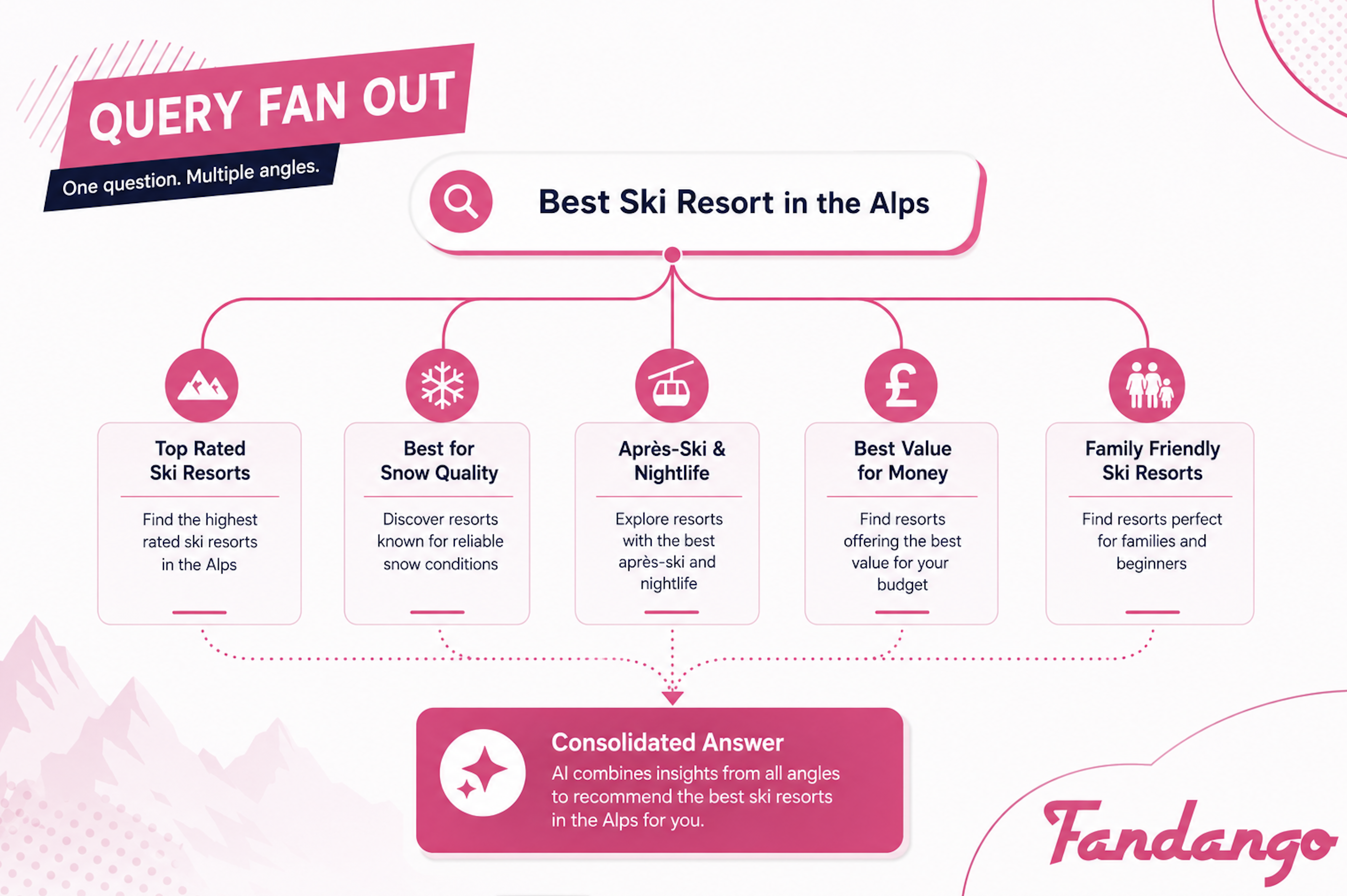
Rather than matching your query to one best page, Google’s AI Overviews and AI Mode work out the intents and entities hiding inside a search, then generate a set of subqueries to explore each angle. Each sub-query runs its own search, pulling from different pages and sources, before everything gets synthesised into one answer. Google confirms this in its own Search Central documentation: “Both AI Overviews and AI Mode may use a ‘query fan-out’ technique – issuing multiple related searches across subtopics and data sources – to develop a response.” The concept traces back to Google’s Thematic Search patent, filed in late 2024, which sets the process out in stages: detecting entities and intent, expanding into sub-queries, running parallel retrieval across different indexes, and synthesising the strongest passages into one response. P
icture someone searching “best ski resort in the Alps”. Behind that single query, the AI system might fan out into five hidden searches: top-rated resorts, best snow quality, best value for money, family-friendly options, and best après-ski and nightlife. Five separate searches, five different sets of ranking pages, one blended answer for the user.
Why This Changes Everything for Your SEO Strategy
This is where it gets serious for anyone still measuring success purely by keyword rankings. A December 2025 study by Surfer SEO analysed 173,902 URLs across 10,000 keywords and found that pages ranking for fan-out queries are 161% more likely to be cited in AI Overviews than pages that rank only for the main search term. Even more telling, 68% of the pages actually cited in AI Overviews didn’t rank in the top 10 for the main query, or any of its fan-out queries, in classic organic search.
Ranking #1 for your head term no longer guarantees you’ll appear in the AI-generated answer. What matters now is coverage: how many of the sub-questions circling a topic your content genuinely answers.
The Trade-Off: What You Stand to Gain (and Risk)
Query fan-out cuts both ways, and it’s worth being honest about both sides.
The risk: when an AI Overview answers a query directly, users may never click through to your site, even if you’re cited as a source. Traffic becomes less predictable, and visibility doesn’t always translate into visits the way it used to. Ranking well is no longer the same as being seen.
The opportunity: your pages can now surface for sub-queries you never explicitly targeted, opening up what we’d call an expanded ranking surface. This particularly favours specialist businesses. A small outdoor retailer selling ultralight ski jackets, for instance, can get pulled into an AI Overview for “best ski gear” purely because their product page answers one specific facet of that broader query in real depth. Niche expertise, covered properly, can now compete directly with the big generalist players.
How to Build Content AI Search Can Actually Understand
Winning in a fan-out world comes down to structure as much as writing quality. A few principles matter most:
Name your entities clearly. People, products, places, concepts — Google uses these to work out what your content covers and how to disambiguate it. (Is “Amazon” the rainforest, or “Amazon” the retailer?)
Give every entity an intent. Take “standing desk”: informational (“what is a standing desk”), comparative (“standing desk vs traditional desk”), and transactional (“where to buy a standing desk online”). Content mapped to each intent has a far better shot at being pulled into different fan-out sub-queries.
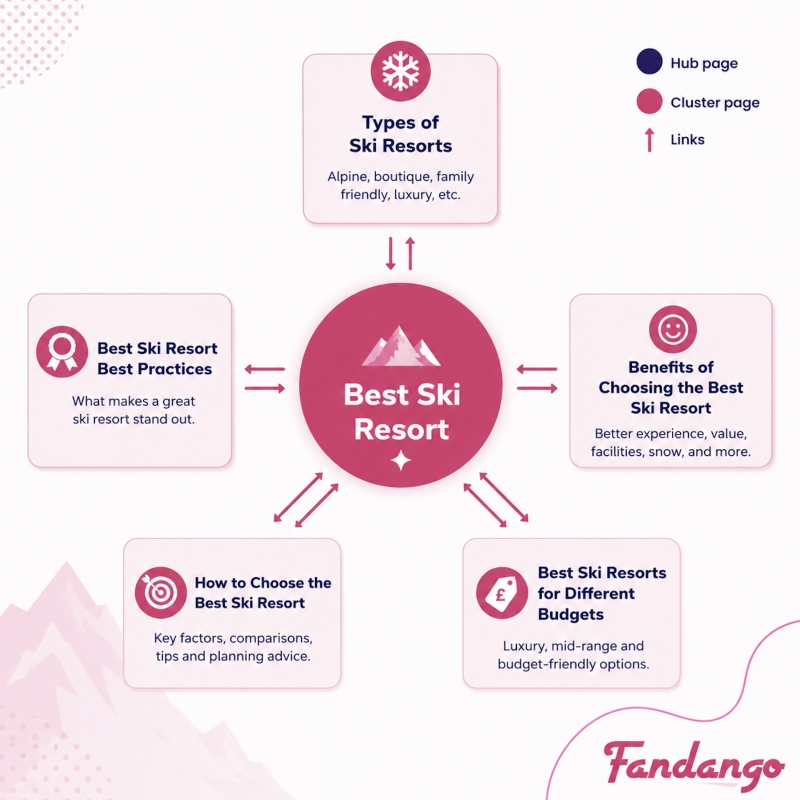
Structure content in hubs and spokes. Broad hub pages build topical authority; specific cluster pages go deep on individual entity-intent combinations, linked back to the hub and to each other with descriptive anchor text. Together, they mirror how Google organises information thematically.
Write for the passage, not just the page. AI systems often surface the single best passage that answers part of a query, not the whole article. Question-style H2/H3 headings followed by a clear, self-contained answer consistently perform best.
SEO Still Matters – Arguably More Than Ever
Here’s the part worth repeating to anyone who thinks AI search has made SEO redundant: Google says explicitly that there are “no additional requirements to appear in AI Overviews or AI Mode, nor other special optimisations necessary.” The fundamentals — crawlable, well-structured, genuinely helpful content — still do the heavy lifting. Sites appearing in AI features are even reported in the same Search Console Performance report as the rest of your organic traffic, and Google has noted that clicks arriving via AI Overviews tend to be higher quality, with users spending more time on site.
What’s changed is precision. Query fan-out rewards businesses that understand their audience’s full intent universe, not just their top keyword. That takes sharper research, smarter content architecture, and a willingness to build for questions your customers haven’t typed yet.
Quick Takeaways
- Query fan-out breaks one search into multiple hidden sub-queries before AI Overviews and AI Mode generate an answer.
- Pages that rank for fan-out queries are 161% more likely to be cited than pages ranking for the main term alone.
- Ranking #1 no longer guarantees visibility – content depth and topic coverage matter more than position.
- Specialist, entity-rich content can now compete with bigger generalist sites.
- Traditional SEO fundamentals still apply. There’s no special “AI SEO” hack – just sharper execution of the basics.
We’ve put all of this – plus the deeper technical detail, the e-commerce and media playbooks, and a full framework for structuring your site for the fan-out era – into one guide.